What Could Your Hudson Valley Home Earn on Airbnb?
How to evaluate a vacation rental projection: comparable homes, available nights, seasonal demand, management fees and property expenses.
 Justin Feldstein
Founder, Haus Vacation Rentals · Licensed NYS Real Estate Broker
Justin Feldstein
Founder, Haus Vacation Rentals · Licensed NYS Real Estate Broker
A useful revenue projection starts with your home and how you want to use it. A nearby rental's annual income can be a reference point, but it does not establish what your house will earn or what you will keep.
Start with the home, not a market average
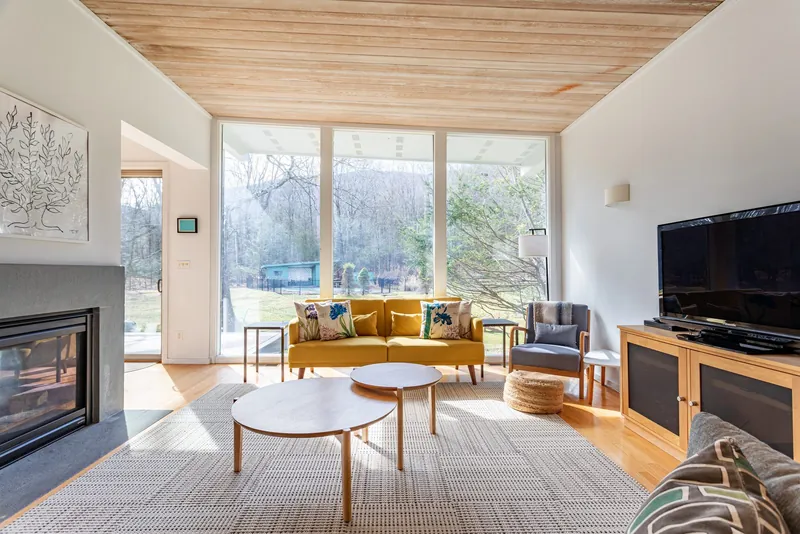
Record bedrooms, bathrooms, comfortable guest capacity, condition and amenities. Note seasonal limitations: whether a pool is open, how guests reach the home in winter, or whether part of the property is unavailable. A photograph of a similar house does not tell you whether it operates like yours.
Tell us whether the house is already listed, which channels it uses and what work is still needed. Existing booking and expense records are more useful than an advertised nightly rate alone.
Choose useful comparisons
Look for homes that guests would reasonably consider alongside yours: similar location, sleeping capacity, amenities and condition. Ask which dates the data covers, how many homes were considered and whether revenue is observed or estimated. One exceptional property should not stand in for a whole market.
A market report describes comparable rentals. A property-specific projection also needs your availability, costs and operating plan. Keep those two steps distinct. Our guide to revenue-estimation tools explains why estimates need review.
Build the calendar season by season
Start with nights available to rent, then estimate how many could book and at what rate. Separate peak periods, ordinary weekends and quieter midweek nights. Do not multiply one strong month by twelve.
For each period, the basic rental calculation is available nights × expected occupancy × average booked nightly rate. Use an occupancy figure based on available nights for that calculation; ask how a data provider defines occupancy before using its number.
Mark your own stays before running the scenarios. Removing a popular holiday can have a different effect from removing the same number of quiet weekdays. Haus asks for at least 180 rental days a year, subject to your agreement and existing guest bookings. That is availability, not a booking guarantee.
Separate rental revenue from owner proceeds
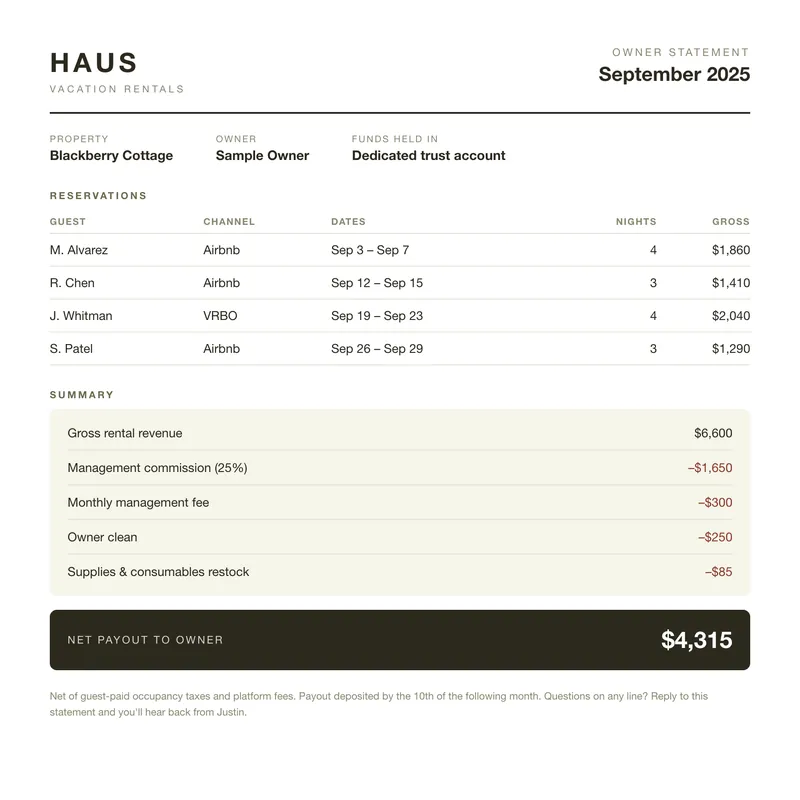
First establish what the revenue figure includes. Guest-paid taxes, cleaning charges and platform fees can make two apparently similar totals incomparable. Apply the management commission to the basis in your agreement, then account for recurring charges, onboarding and property expenses.
Our fee schedule and worked example show the commission, monthly fee and one-time onboarding charge. Repairs, supplies, utilities, insurance, property taxes and financing still matter to your overall economics. An amount remaining after management fees is not the same as profit.
Review rental activity, fees and expenses together to understand the owner payout. Keep operating assumptions separate from a record of money already earned.
Review the assumptions before the headline
- The property: does the description reflect its current condition and amenities?
- The data: which homes and observation period support the estimate?
- The calendar: are your own stays and unavailable periods included?
- The scenarios: what changes between lower, central and stronger outcomes?
- The costs: which charges are included, estimated or still unknown?
- The plan: what work needs to happen before the home can perform as assumed?
A projection is a planning estimate, not a promise. Ask for an explanation of what would make the result lower as well as what could improve it.
Start with your house
Tell us about your property and rental plans. Justin replies personally within 24 hours. If your home is a fit, he prepares a free projection using market data and comparable homes. Tell us about your home.